
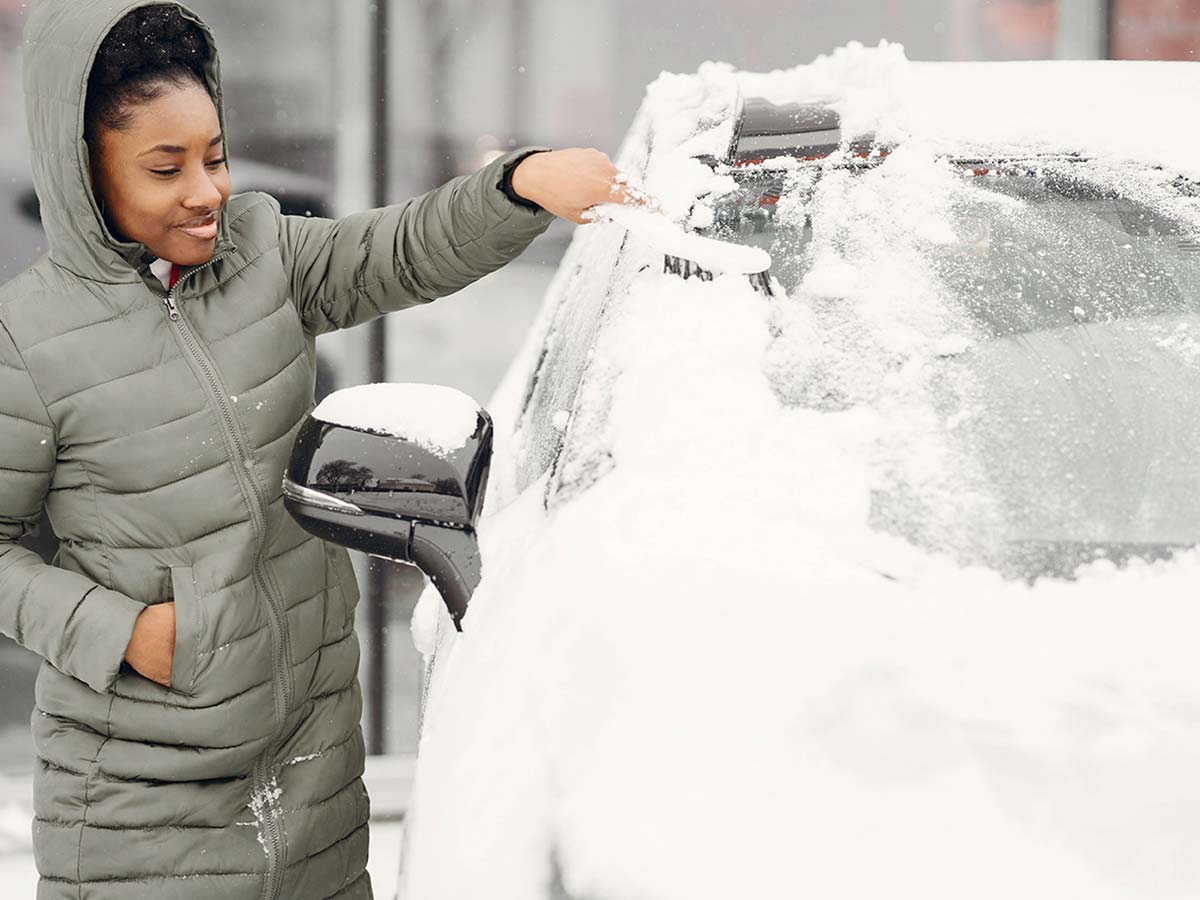
How to prepare your car for winter
Replace your windshield wipers and washer fluid for winter
Winter windshield wipers are built to withstand harsh weather and help improve visibility in extreme cold, heavy snow, sleet and other challenging conditions. Winter windshield washer fluid is formulated to resist freezing, help melt light frost, and remove salt and slush from your windshield. And since reduced visibility is a safety issue, make sure you’ve got some extra fluid in your car.
Test your battery
It's recommended to test your car battery once a year. Depending on how you drive and if your car is more than 5 to 7 years old, it might be time to replace the battery. Batteries can die, even if you’ve done everything right to help extend its life. Don't wait until your car refuses to start in the middle of a -20 °C snowstorm!
Switch to winter tires
When the temperature drops below 7 °C, winter tires have better grip than all-season tires. Made from rubber compounds that stay more flexible in cold weather, and designed with deeper tread and extra grooves, they offer better traction on snow and ice. They really are an important safety feature on icy roads.
In Quebec, cars must have 4 winter tires from December 1 through March 15 or drivers risk a fine. Look for tires with the official three-peak mountain snowflake symbol, which indicates they meet certain industry standards. These tires also comply with Quebec regulations. Requirements vary in other Canadian provinces and territories, but most recommend winter tires for safe winter driving.
Get your antifreeze checked
Your antifreeze helps protect your engine from freezing in winter or overheating in the summer. Make sure you follow the recommendations in your car manual for the coolant type and formulation. You can also get the mixture checked at a repair shop (sometimes at no charge) or buy your own tester.
See if you need an oil change
Check your owner's manual to find out how often to change the oil and filter. The frequency can vary depending on your car model and your driving habits. In the winter, it is especially important to have the right oil texture as it tends to get thicker in cold temperature.
Grease locks, latches, doors
Have you ever been locked out of your car due to frozen doors in the icy weather? To help prevent it, make sure to lubricate the door locks, latches and hinges, before the temperature drops. A little silicone spray can go a long way!
Protect your car interior with floor mats
Take extra care of the floor mat in front of the driver's seat this winter. Choose the right mat size for your car to avoid obstructing the brake and accelerator! You can install winter floor mats designed to reduce salt stains and provide better coverage. Don't forget to dry out your floor mats from time to time to get rid of the moisture.
Have your spark plugs checked
Spark plugs can wear out over time. Consider getting them checked before the cold sets in, as they can affect your engine's performance and result in a loss of power. At the same time, well-functioning spark plugs can help improve your vehicle's fuel efficiency.
Key takeaways
Regular car maintenance is important, and even more so in winter; the coldest months of the year can be especially hard on your car. This list is a good starting point, but it's always best to have your car checked by a reliable mechanic for safer, smoother driving this winter!
More tips to help protect your car
5 ways to avoid having your car stolen
Additional resources
External link. Opens in a new tab.Prepare an emergency kit for your car