
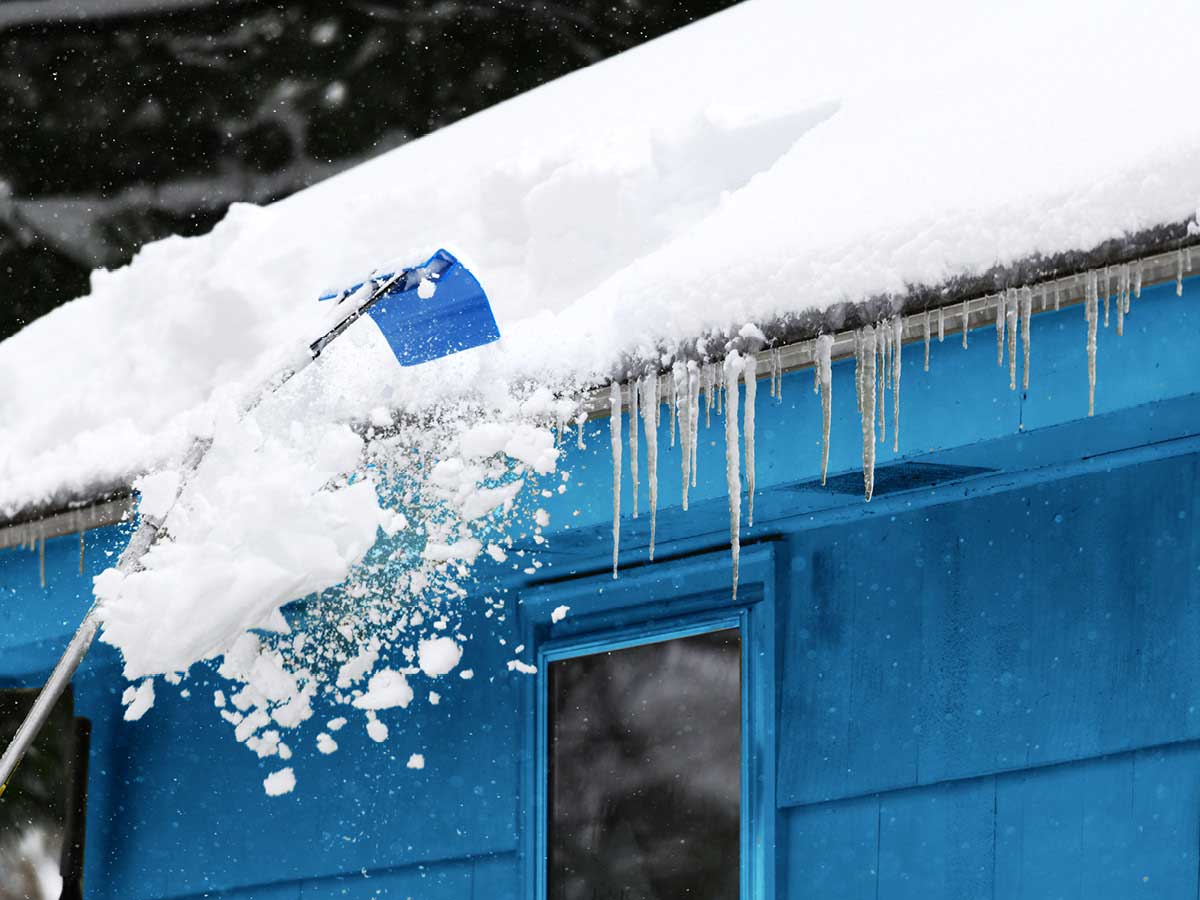
1. Snow and ice buildup on the roof
Generally speaking, Canadian homes are designed to withstand the harsh winter. But snow and ice can easily build up and all that extra weight can damage your roof.
When to clear the snow or ice from your roof
Clear your roof:
- When 60 cm (2 ft) of snow or 5 cm (2 in) of ice has accumulated
- After a snowstorm followed by freezing rain
- If you notice early signs of structural damage
Snow removal tips: Be very careful when clearing snow and ice from your roof. If you’re clearing the roof yourself, work from the ground using a roof rake with a telescopic handle. Take care not to accidentally damage the roofing material and keep your tools well away from nearby hydro cables.
Note: Be sure to leave a 2-inch layer of snow when clearing your roof so your tools don’t damage your shingles. Improper roof snow removal could result in damage that is not covered by your home insurance.
Call in the pros: While you may be able to clear your roof yourself, it can be dangerous. That’s why we recommend that you hire a professional with the right equipment and knowledge of safety procedures, especially for removing ice, which is a more difficult job.
Warning signs of water seepage
No matter how much snow or ice there is, be on the lookout for signs that water is seeping through the roof. Check the ceiling and walls on the top floor of your house for:
- Water stains or rings
- Blistering
- Water droplets
Signs of structural damage
- Cracks on indoor walls
- Interior doors that start to stick, rub or not close properly
- Warped ceilings
- Unusual structural creaking
If you’re worried about the risk of water seepage or buildup of snow and ice on the roof, consult a building expert as soon as possible.
Does your home insurance cover you against snow and ice damage?
Having the right water damage coverage can give you peace of mind. If you're insured with us, you may have additional coverage to help protect your home against snow and ice damage, such as Water Damage – Above Ground Water and Weight of Ice, Snow or Sleet coverage. Check your policy to confirm.
2. Ice on the edge of your roof
Those icicles hanging from the eavestrough may look pretty, but they spell trouble. They can be a sign of a potentially serious problem: ice dams. An ice dam is a ridge of ice that forms at the edges of a sloped roof.
Ice dams tend to be caused by poor ventilation or insulation in the attic, which allow heat to escape from the roof, melting any accumulated snow. The melting snow then flows down to the lowest part of the roof where it refreezes. Ice gradually builds up there, forming a barrier (an ice dam) that prevents the snow melt from draining off the roof. From here, water may seep into your house through the walls and ceilings.
Help prevent ice dams
Here are some tips to help prevent damage caused by ice dams. Here again, we recommend that you hire a professional with the right equipment and knowledge of safety procedures.
- Regularly check the edges of your roof to make sure no ice dams are forming.
- Inspect the attic and seal any openings that could let warm air from your home escape into it.
- Make sure the attic is well ventilated, well insulated and cool. That way, any snow on the roof will be less likely to melt and create ice dams.
- Ensure that the attic floor is well insulated to help prevent heat from inside the home escaping through the roof and forming a layer of ice, which can quickly become an ice dam.
3. Snow buildup on your above-ground pool
Above-ground swimming pools are designed to withstand the weight of water in the summer, but they’re more vulnerable to the pressure of heavy snow and ice in the winter. Also, if the snow isn’t removed, spring melting and refreezing can cause it to expand into a block of ice, potentially damaging the pool, especially the cover. You can help avoid these problems by regularly clearing the snow off your swimming pool, so it’s never entirely buried under snow.
Here are 4 steps to help protect your above ground pool in winter:
- Remove the snow from the pool
But don’t get in the pool to do it! If you do, the snow or ice could give way under your weight. This could damage the pool cover—and injure you! - Avoid damaging the rim
Use a plastic shovel to avoid scratching the rim. Don’t walk on the rim either, as this could weaken or crush the pool structure. - Don’t forget about the skimmer basket!
Remove snow from inside and in front of the skimmer to help prevent it from cracking. - Hire a professional if needed
When in doubt, hire a professional.
4. Maintenance of your hot tub during the cold season
Proper maintenance will allow you to enjoy them throughout the season and keep them functional for the rest of the year.
Always keep a shovel close to your hot tub so that you can remove snow buildup around it.
Hot tub Cover:
- Avoid snow and ice buildup during the winter, which can damage the cover. To remove snow and ice, use a soft-bristled broom instead of a shovel or other sharp tools that can damage the vinyl.
- A quality hot tub cover designed for your climate provides added protection during the winter and helps also reduce your heating costs.
- If you live in an area with heavy snowfall or extreme cold, a thicker, tapered hot tub cover is recommended for added protection.
Protective Cover:
- Although a well insulated cover is a must for our harsh winters, a protective cover will also provide additional protection for both your hot tub and hot tub cover.
- Protective covers are made of polyethylene resin and installed over your hot tub cover. They can help keep debris, snow and ice out of your hot tub.
If you keep your hot tub running throughout the winter
- Cleaning the filters:
It’s important to clean the filters in the fall. A dirty filter can prevent the hot tub from working properly. And if the water flow is too low, the heater and power pack won’t operate properly, so the tub will shut down to prevent overheating. - Water Temperature:
Be sure to check the water temperature frequently to make sure the heater is operating properly. - Water Level:
Pay attention to the water level during the winter season. If it is too low, the pumps will shut down and the water in your hot tub will cool or even turn to ice, possibly damaging your hot tub and plumbing system.
5. Protect other parts of your home
- Stairs, doors and balconies
Remove snow or ice right away. Remember to be thorough—especially if they’re used as emergency exits. - Temporary carports
Temporary carports aren't designed to withstand excessive snow and ice buildup, so it’s important to clear them regularly. They can collapse under the weight of snow, so be sure to work from the outside rather than the inside or under the carport when removing snow. - Oil and gas appliances
Make sure there’s adequate clearance around tanks and pipes and that they’re easily accessible and protected should snow and ice fall from the roof.
Your home is your castle, so be sure to follow these tips to help protect it against harsh winter weather.