
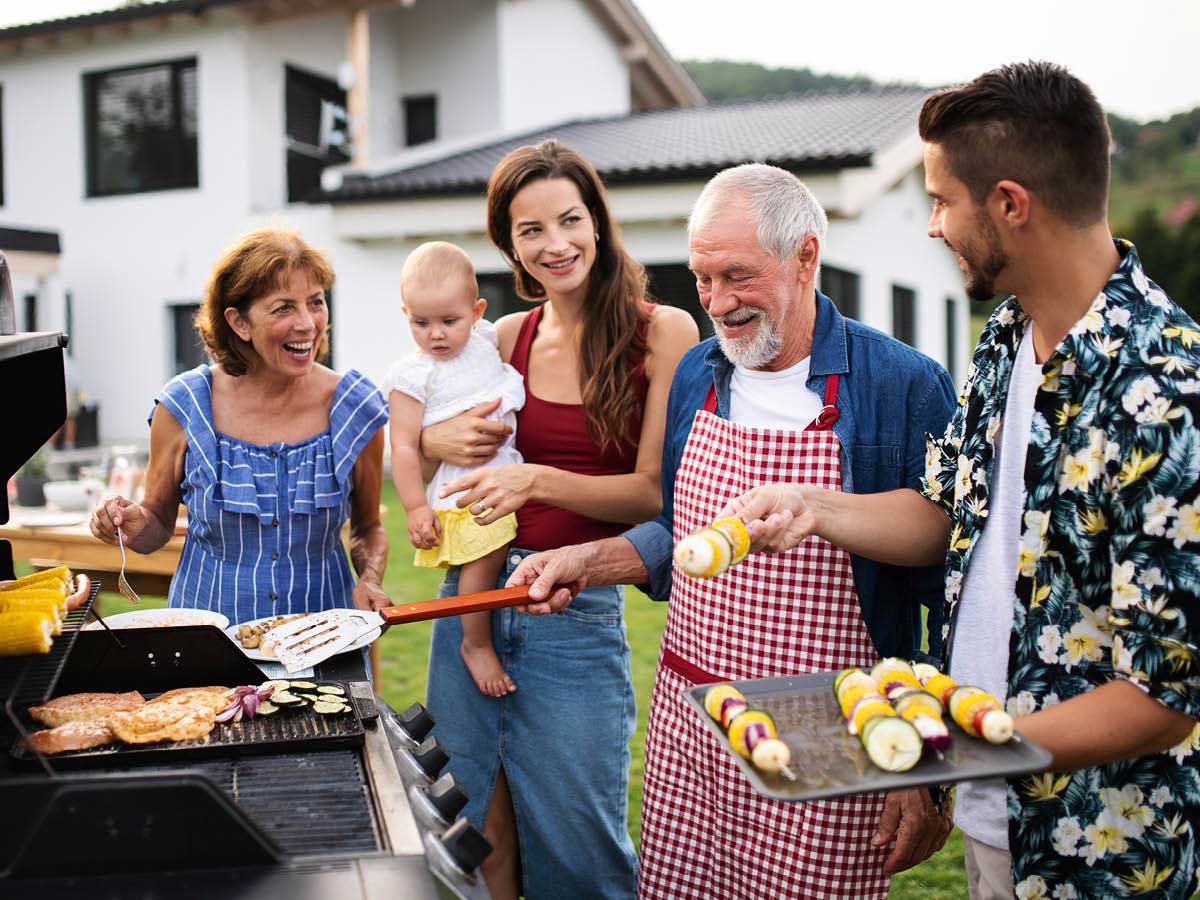
While the weather is certainly beautiful, the risk of both wildfires and house fires increases significantly during the summer months. Follow these tips to help prevent fires, keep your family and property safe, and enjoy every moment of the season!
1. Check fire risk conditions
Before you leave your home, check the degree of risk for a wildfire. An online search will inform you of regional fire risks and any outdoor burning regulations for the area you plan to visit. If you plan to build a campfire in dry areas, always follow local fire restrictions and the warnings and evacuation orders issued by your provincial or municipal authorities.
2. Be careful when barbecuing
Propane and charcoal grills can be hazardous if not used and maintained properly. By following these grill safety tips you can help reduce the risk of starting a fire:
Never use a barbecue indoors
Never move your barbecue indoors or into an enclosed space like your garage or shed. Such spaces not only contain highly flammable materials, but charcoal and gas grills also produce large amounts of carbon monoxide that can build up and lead to a life-threatening emergency.
Clean and inspect your grill
Spring is the ideal time for annual barbecue maintenance; a good cleaning helps ensure it’s ready for use again.
- Before performing any maintenance, make sure the supply valve is fully closed. If you use a propane tank, also check that it is in good condition and has not reached the end of its lifespan.
- Remove and clean burner plates and cooking grates with a wire brush.
- Scrape the inside with a spatula to remove any residue, then clean with hot, soapy water.
- Examine the condition of the burners and clean them gently with a stiff brush.
- Check the condition of all fittings with soapy water to ensure there are no leaks.
- Make sure the control knobs and igniter are working properly.
- Once finished, replace the burner plates and cooking grates.
To minimize the risk of a grease fire, clean your grill after each use and clear any food debris that may have accumulated inside your barbecue. If your grill has a grease tray, empty it regularly.
Never leave your barbecue unattended
Barbecues use open flames to cook food and can become a fire and safety hazard if left unattended. If you need to step away from the barbecue, ask another adult to watch the grill for you.
Keep the barbecue away from your home
Grills that are placed close to a house or other structure can heat up surrounding materials and start a fire. Put your grill at least 24 inches or 60 centimetres from any structure or overhangs1.
If you rent your home or live in a condo, it’s also important to familiarize yourself with any specific requirements put in place by your landlord or condominium association and comply with all requirements listed on your lease.
What to do in case of a fire
You should always keep a fire extinguisher nearby when grilling. In case of a barbecue fire, it's essential to stay calm and act quickly. If the fire is under control, close the barbecue lid to smother the flames. If the barbecue is gas-powered, immediately turn off the fuel source. Also remember that it's crucial to never pour water on a grease fire, as this can make the situation worse. If the fire becomes uncontrollable, evacuate the area and call the fire department immediately.
3. Build safe campfires
An improperly built campfire can quickly get out of control and endanger people and the surrounding ecosystem. Keep it safe by following these tips:
Pick a safe location
Most campgrounds provide a fire pit where you can build a campfire. If you're in an area where campfires are allowed but a pit is not available, select a flat, open location away from flammable materials and overhanging branches.
Be sure to follow your municipalities’ rules before having an outdoor fire. Some parks and municipalities may require fire permits to build a campfire.
Keep water nearby
Don’t start a campfire without having enough water or sand nearby to control embers and douse flames that may jump outside the pit.
Pay attention to the wind
A sudden gust of wind can turn your campfire into a wildfire. Keep anything flammable, including tents and unused firewood, upwind of the campfire and well away from the heat.
Never leave a campfire unattended
Even if you need to leave the campsite for a short period of time, the fire must be completely extinguished. A gust of wind could easily spread the flames if you aren’t around to douse them.
Extinguish the fire completely
When you are done with your campfire, you must extinguish it properly. Douse the fire with some water, stir the ashes with a shovel or stick, then pour more water on the fire. The ash should be cool to the touch before you leave.
Bottom line: by taking the necessary precautions to reduce the risk of both wildfires and residential fires, you help protect your community, your home and your family. Be sure to closely monitor local news and municipal and provincial regulations to be extra cautious—especially if you live in a fire-prone area.